
A microbiologist’s worst nightmare is getting a false positive because of cross-contamination.
To avoid this, laboratories need to be cleaned and disinfected very regularly… and let’s be honest, most of us did not choose microbiology studies to spend our days disinfecting benches.
But it still has to be done.
So we went looking for solutions that can make laboratory disinfection easier… so you can spend more time doing microbiology and less time investigating false positives!
Content :
Nocospray by Oxypharm
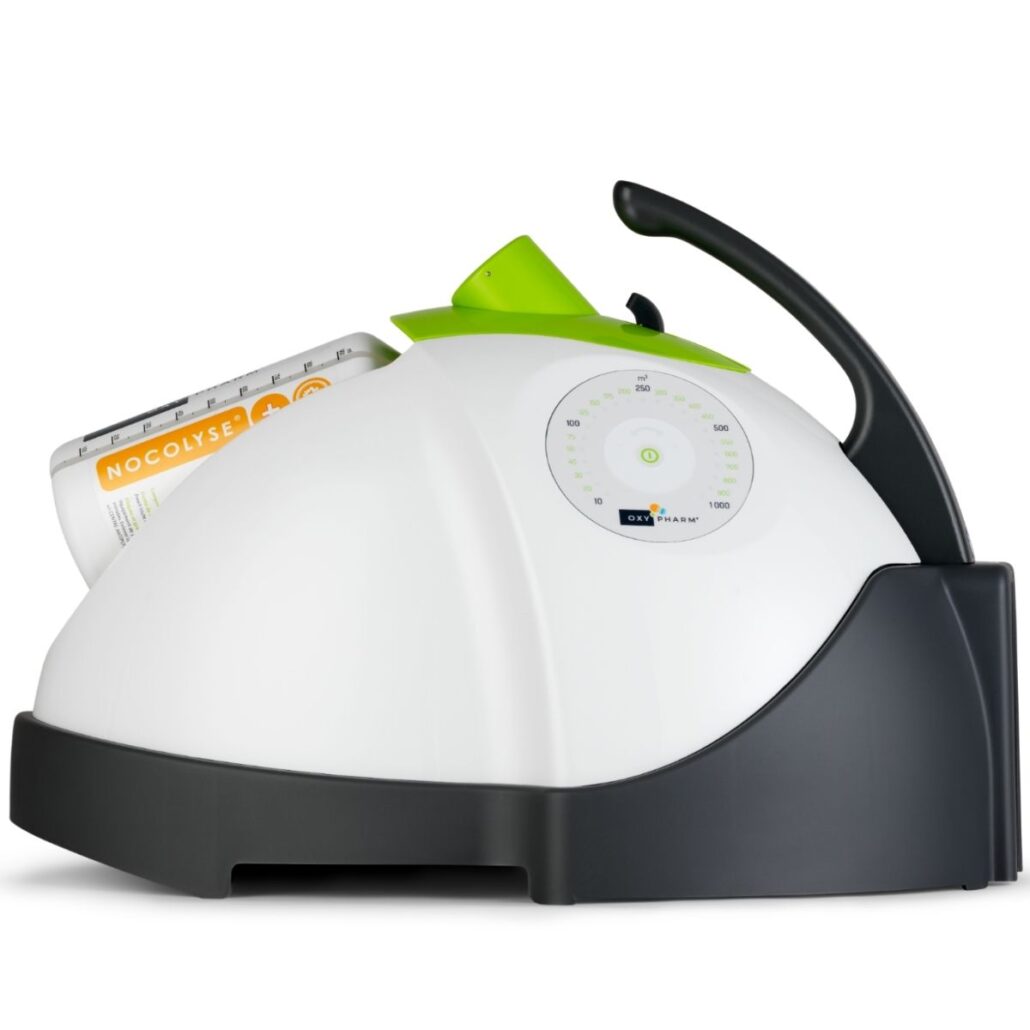
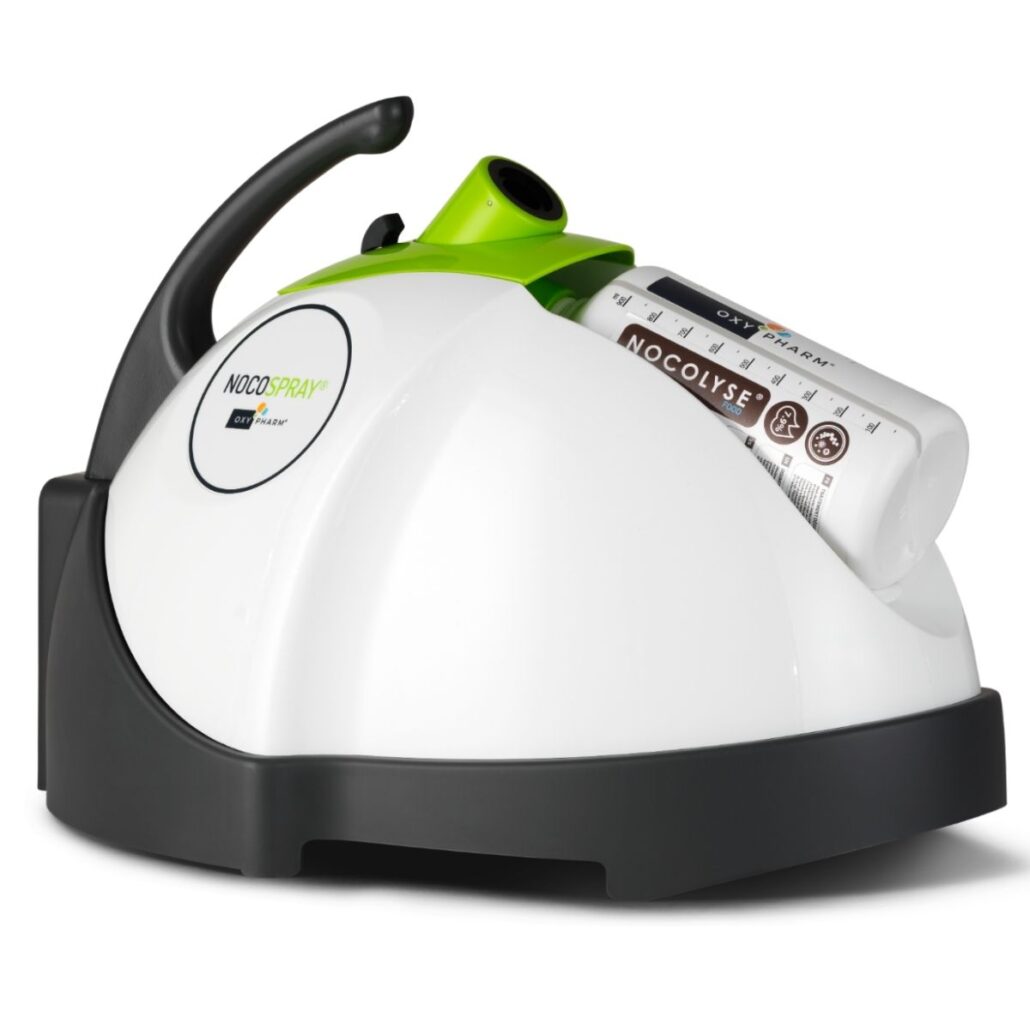
Nocospray is an automated airborne surface disinfection system based on Nocotech technology.
It combines a diffusion device with a hydrogen peroxide-based disinfectant to create a dry fog that evenly treats the entire volume of a room.
This ultra-fine diffusion provides uniform coverage of all surfaces, including hard-to-reach areas, without leaving residues or causing corrosion.
The process is fully automated, reproducible, and effective against a wide range of microorganisms, ensuring complete bio-decontamination of treated areas.
The NOCOTECH range includes the following devices
- For volumes from 1 to 10 m³: Nocospray Kube
- For volumes from 10 to 1,000 m³: Nocospray, Nocospray Inox , Nocospray Mural, Nocospray Traversée de Cloison, Nococcinelle
- For volumes from 500 to 20,000 m³: Nocomax Inox, Nocomax Inox Mural
What can be decontaminated with this system?
Nocospray can decontaminate a wide variety of environments and equipment, including microbiology laboratories, cleanrooms, production areas, hospital rooms, operating rooms, care rooms, as well as equipment such as biological safety cabinets, isolators, incubators, and enclosed chambers.
Thanks to its homogeneous diffusion, it is suitable for all areas requiring complete and controlled disinfection.
System performances
Nocospray offers fast decontamination cycles that can be adapted to the treated volume.
For example, a laboratory or production room generally requires a complete cycle of around 2 h 30 to 2 h 45, including diffusion, contact time, and ventilation.
For critical environments such as cleanrooms, contact times of around 2 hours can achieve microbial reductions greater than 6-log.
For small volumes (Nocospray Kube), such as biological safety cabinets, incubators, or airlocks, cycles are much shorter, with complete treatments performed in 30 to 45 minutes.
Key advantages of Nocospray
- Uniform and complete diffusion: Ultra-fine dry fog ensures even distribution of the disinfectant on all surfaces, including hard-to-reach areas.
- High microbiological efficiency: Effective against a broad spectrum of microorganisms (bacteria, viruses, spores, fungi) with high reduction levels (up to >6-log).
- Automated and reproducible process: Fully programmable cycles ensure reliable, standardized disinfection independent of the operator.
MycoFog®
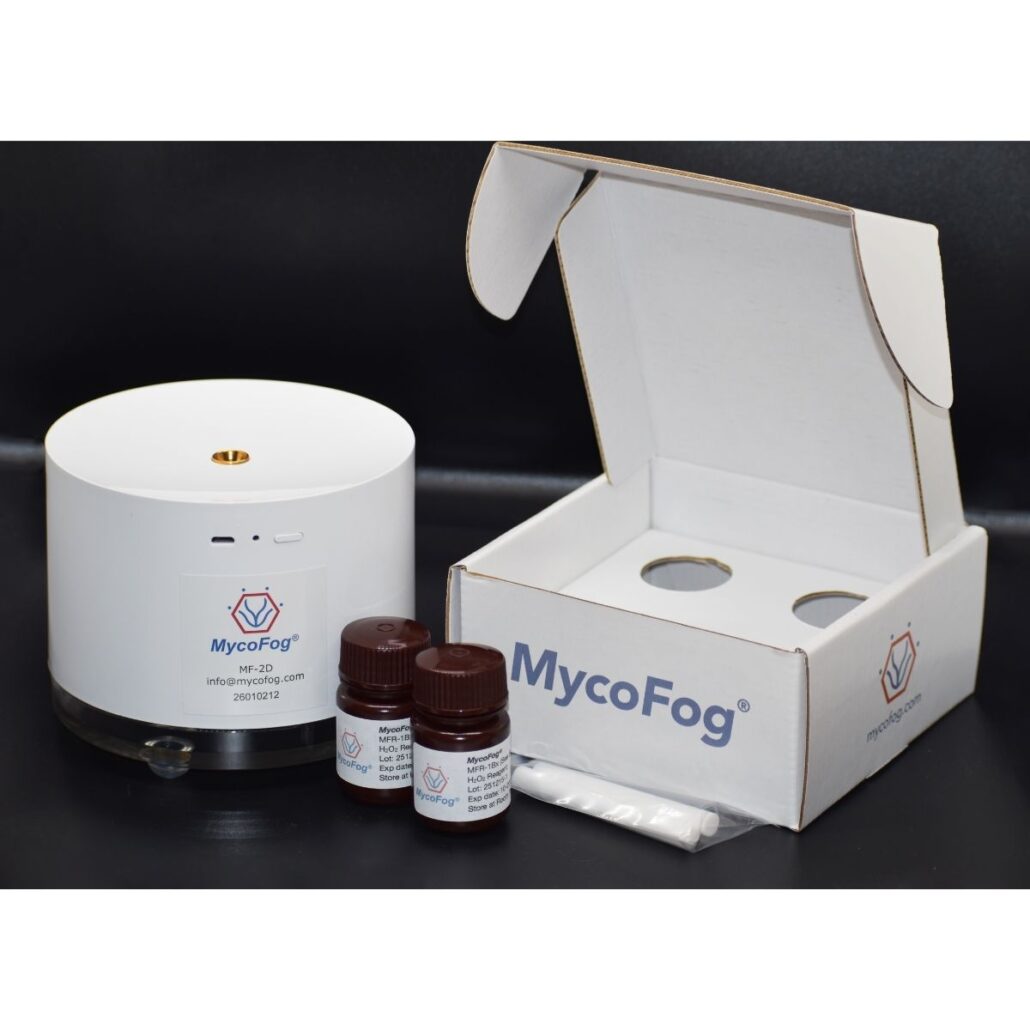
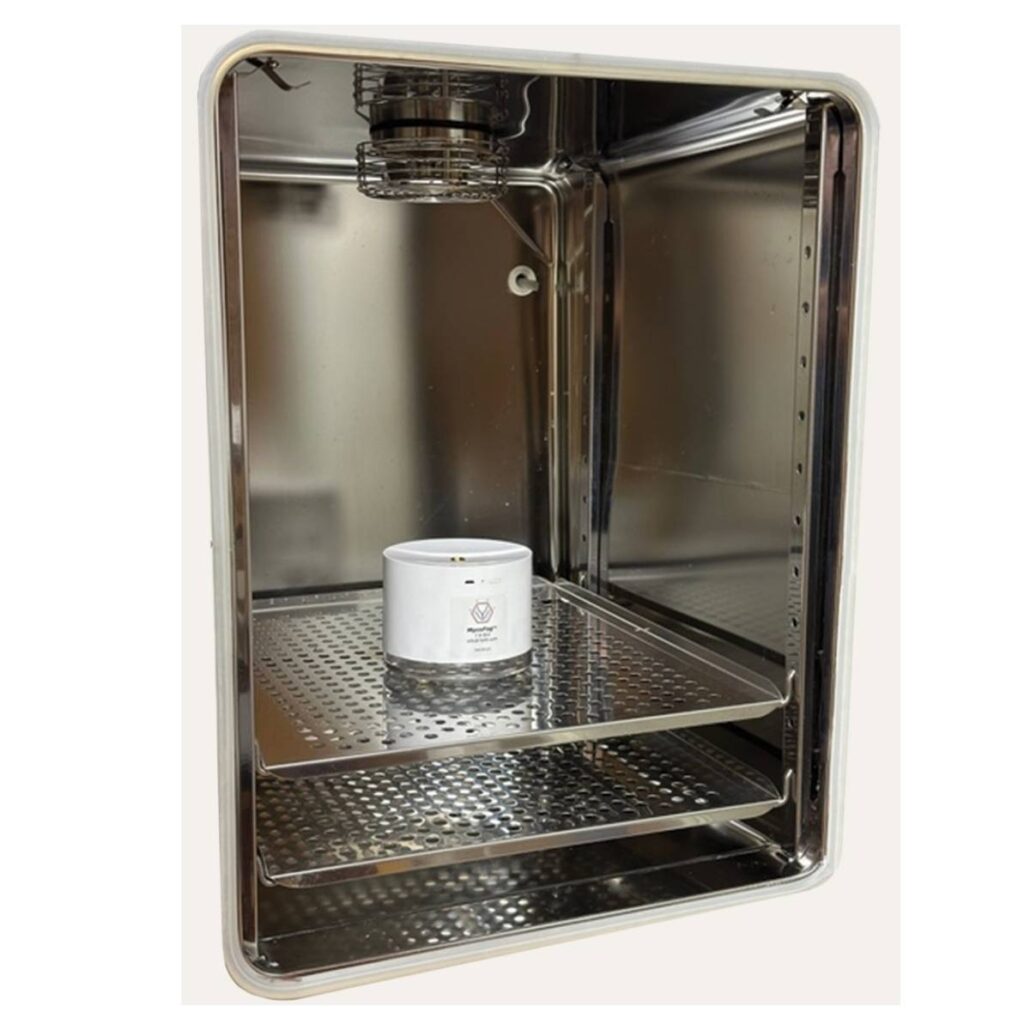
MycoFog® is a small, lightweight (<400 grams) battery operated H2O2 fogging system comprising a small instrument and pre-dispensed, ready-to-use reagents designed to bio-decontaminate enclosed laboratory equipment such as incubators, anaerobic chambers, and climate controlled workstations.
Designed as a simple “press start, walk-away” process, MycoFog helps laboratories achieve repeatable, validated decontamination with minimal operator intervention and downtime.
The MycoFog® range includes the following devices
- MycoFog® 2D for incubator volumes from >50L to <500L (internal volume)
- MycoFog® 500D for incubator volumes from >500L to <1200L
What can be decontaminated with this system?
Any closed cell culture and microbiology incubators, gloveboxes and anaerobic and microaerophilic workstations.
System performances
Each bio-decontamination cycle takes 3 – 5 hours (depending on operating temperature and chamber volume), and results in a 6-log microbial reduction with proven efficacy against bacteria, fungi, spores and hard-to-eliminate contaminants.
Key advantages of MycoFog®
- Safe and Easy-to-use: With its simple set up and 12-second start delay, anyone can start a decontamination cycle in minutes, worry free.
- Protects Valuable Cell Cultures: Regular use reduces contamination risk, downtime, lost experiments, and costly incubator shutdowns.
- Low Cost: This efficient, effective, and economical system has a minimal cost/cycle, and saves immeasurable time, frustration, and valuable cell cultures through contamination prevention.
MO2ONE XS by Deppik
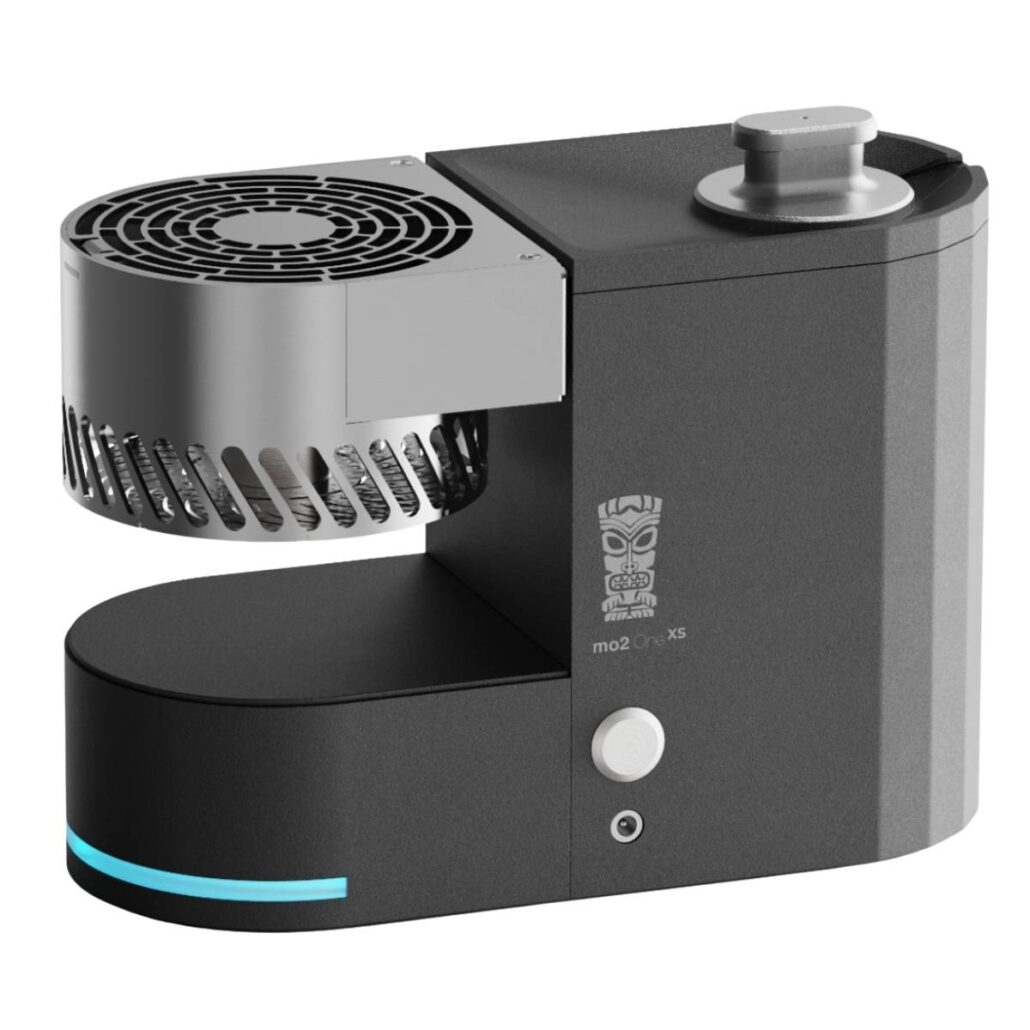
Mo2one®XS is the new technology in small-volume disinfection equipment with swiveling head and fully Android App controlled.
Mo2one® uses the SPRAY OXY PAE biocide developed by DEPPIK. Ready to use and formulated with 7.4% hydrogen peroxide, it provides a broad spectrum of activity, including bactericidal, fungicidal, virucidal, sporicidal, and mycobactericidal efficacy.
Applied at a dose of 9 mL/m³ with a contact time of 3 hours, the process is certified according to EN 17272. The product is also authorized for use in food-contact environments.
SPRAY OXY PAE holds marketing authorization in 12 European countries: France, Germany, Spain, Italy, Belgium, the Netherlands, Luxembourg, Poland, Romania, the Czech Republic, Ireland, and the United Kingdom.
This solution is suitable for pharmaceutical, food manufacturing, healthcare, public-sector, and research environments.
MO2ONE Product range
Mo2one® range is a full airborne surface disinfection (ASD) machine range integrating specific technologies able to treat from 50L (Mo2one® XS) to 1000 m3 (Mo2one®)
What can be decontaminated with this system?
Mo2one®XS is equipped with a rotating head that allows biocide to be distributed vertically (BSCs, airlocks, ovens, sanitary vehicles) or horizontally (ventilation ducts, glove boxes, incubators, Mini Airlocks) to meet the different physical constraints of the volumes treated.
The Mo2one® can decontamine larger volumes, such as microibology laboratories and production area up to 1000m3.
System performances
The Mo2one XS biodecontamination of a 1.5 m³ BSC achieved complete inactivation of 8/8 highly resistant Geobacillus stearothermophilus biological indicators (6-log challenge) across all critical locations, including the lower plenum, demonstrating effective and uniform coverage.
Key advantages of MO2ONE
- Rotating head: Vertical or horizontal diffusion depending on the volume being treated.
- Cool dry mist, zero corrosion risk : The rotating disk technology eliminates any residual moisture.
- Full Built-in digital traceability & automatic report after every cycle: Android Bluetooth control + automatically generated signed report at the end of each cycle.
To learn more about Mo2one®, you can contact Olivier at: ohaution@deppik.fr.
Mobiwatch® Minibio
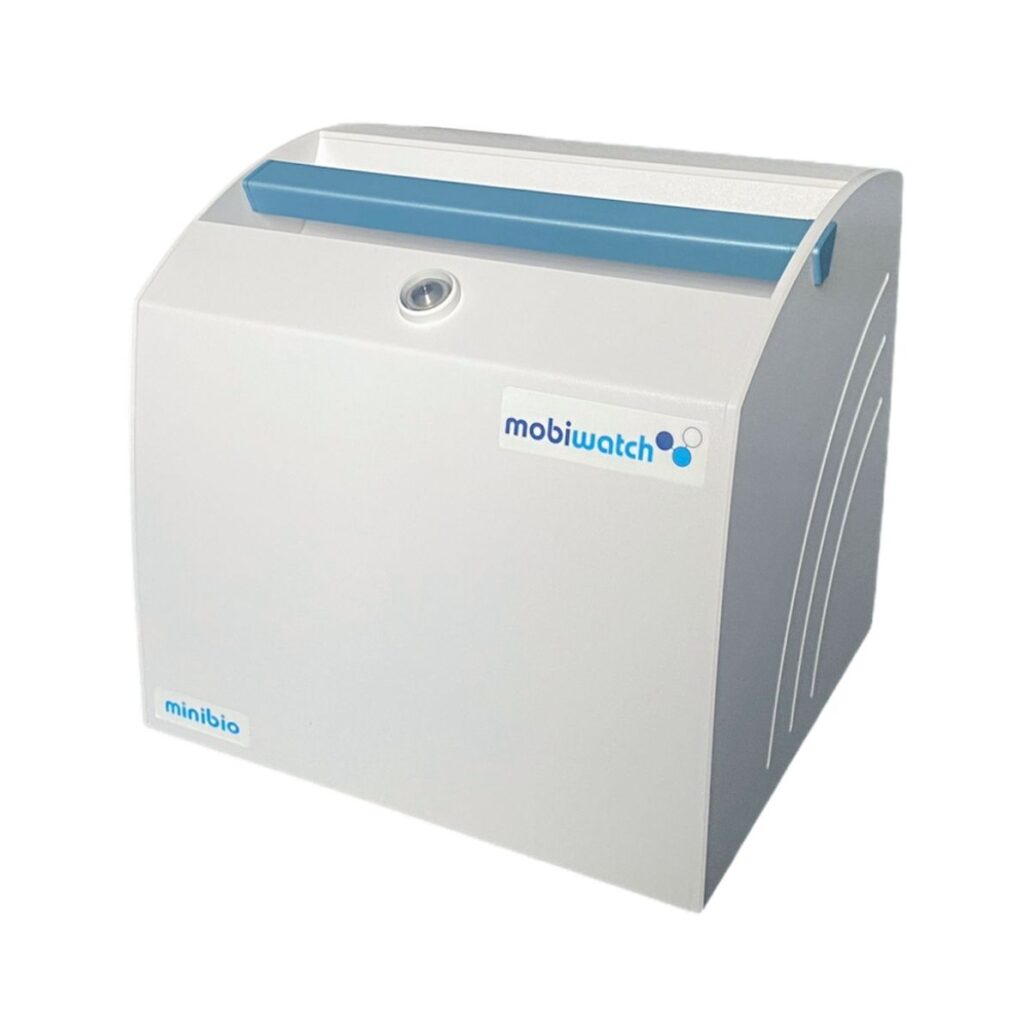
Since 2006, Mobiwatch has provided an Airborne Surface Disinfection (ASD) solution. Following cleaning, the disinfection cycle can be started with just one click.
The biodecontamination process can be carried out when the area is unoccupied, including overnight.
The process can be validated according to EN 17272 requirements, and operational data can be recorded to support traceability.
Mobiwatch®Product range
The Mobiwatch range provides solutions for spaces of all sizes:
- Minibio for very small areas (<5 m³) such as pass-through chambers and small airlocks.
- Maxibio for larger volumes of up to 320 m³.
The M SPP disinfectant solution is compliant with European regulations, ready to use, and non-corrosive. It is based on a combination of hydrogen peroxide and peracetic acid, ensuring effective biodecontamination while maintaining material compatibility.
What can be decontaminated with this system?
Laboratories, biological safety cabinets (BSCs), airlocks, and corridors: the ultra-fine, homogeneous fog generated by Mobiwatch technology enables the effective disinfection of sensitive and confined areas according to your requirements, achieving validated 4-, 5-, or 6-log spore reduction levels.
System performances
The efficacy levels required by the standard (4- to 5-log microbial reduction) are achieved, with up to a 6-log reduction possible when required.
The Maxibio system offers a high diffusion rate, requiring only 20 minutes of injection time to treat a 100 m³ room.
Key advantages of Mobiwatch® Minibio
- Ease of Use: A single click is all it takes to safely start the airborne surface disinfection (ASD) process, with operator safety fully maintained.
- Proven Effectiveness: ASD processes can be validated using biological and chemical indicators. The system meets the requirements of EN 17272, including bactericidal, sporicidal, fungicidal, and virucidal efficacy testing.
- Reliability and Robustness: The equipment is simple, robust, and backed by a 2-year warranty. Customer testimonials are available upon requests.
Chemical and Biological Indicators for H₂O₂ Disinfection
When using an airborne surface disinfection system (ASD), one question quickly comes up:
- How can you verify that H₂O₂ actually reaches all surfaces in the laboratory?
- And how can you ensure that it truly eliminates existing contamination?
The answer is quite simple: there are specific chemical indicators and biological indicators designed for VH₂O₂ treatments.
Chemical Indicators for H₂O₂ Treatments
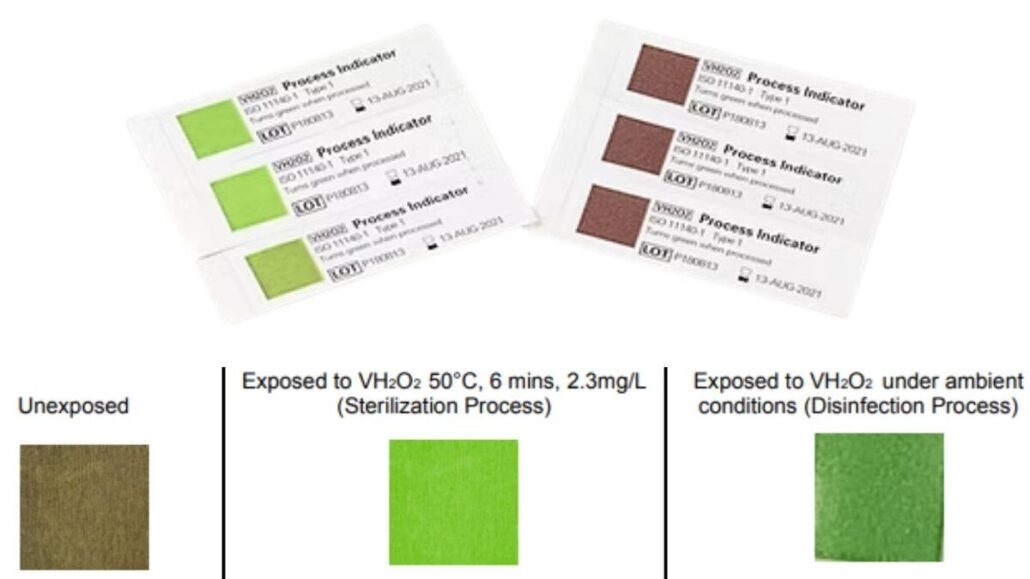
These indicators work a bit like the adhesive strips used in autoclaves that change color when exposed to heat.
The strips are placed at different strategic locations throughout the laboratory.
If the H₂O₂ generated by the ASD system reaches the strip, it immediately changes color. This makes it possible to verify that the treatment has effectively reached all areas of the laboratory.
It is a practical and easy solution to implement, especially during the initial qualification of equipment or after changes in the laboratory (new BSC, incubator, etc.).
These indicators can also be used routinely as proof that disinfection has been performed.
Biological Indicators for H₂O₂ Treatments
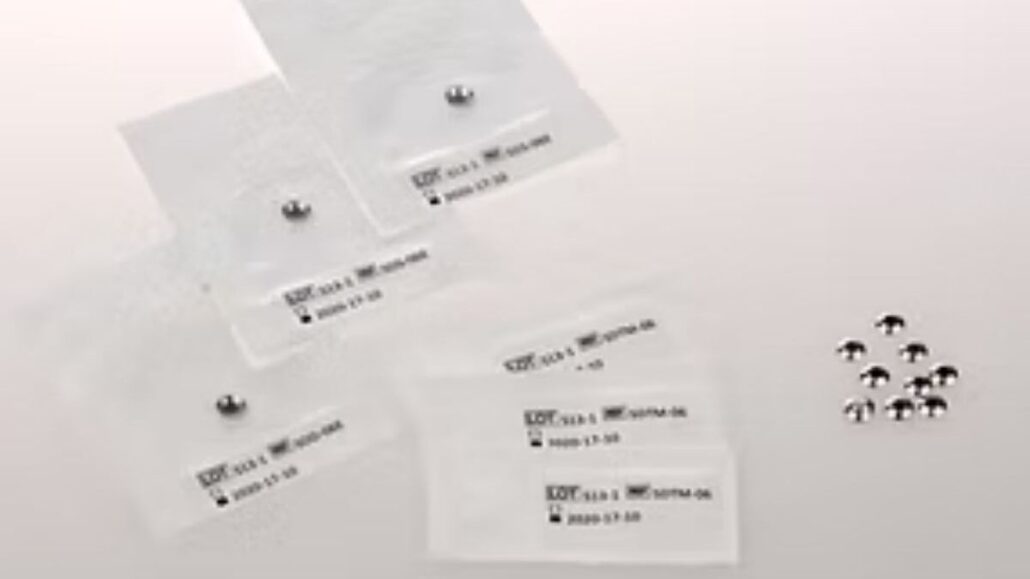
Here, the objective is slightly different: the goal is to verify that the treatment is actually capable of destroying microorganisms.
These are small stainless-steel discs containing a known quantity of Geobacillus stearothermophilus spores (typically ranging from 10³ to 10⁶ spores).
After exposure to the H₂O₂ treatment, the disc is placed into a culture broth and incubated.
- If microbial growth is observed, it means the treatment was not sufficient.
- If no growth occurs, it indicates that the treatment successfully eliminated the microorganisms present.
If you use other easy-to-use and effective disinfection solutions, feel free to share them in the comments!