Key takeaways
- Some laboratories compare several recombinant reagents alongside their existing LAL method to find the best solution for their products.
- Before switching, Meg recommends reviewing the supplier’s primary validation package and checking for gaps related to microorganisms found in your manufacturing process.
- Meg expects LAL and recombinant reagents to coexist for many years, as not every reagent is suitable for every product.
This article is also available as a podcast in more than 20 languages. Click the ⚙️ Settings icon on YouTube, then choose Audio Track and Subtitles to watch it in your preferred language.
Recombinant reagents are becoming increasingly important in Bacterial Endotoxin Testing (BET).
But switching from traditional LAL to recombinant technology isn’t necessarily as simple as replacing one reagent with another!
Which recombinant reagent should you choose? How can you be sure it works with your products? And will LAL eventually disappear?
We discussed these questions with Meg Provenzano, who has more than 15 years of experience in endotoxin testing, including hands-on laboratory testing, technical support and now product management.
She shared what she has seen laboratories do when evaluating recombinant reagents, and why she believes the transition away from LAL could take many more years.
What strategies have you seen laboratories use when switching from LAL to recombinant endotoxin testing?
Meg Provenzano: We’ve had a few customers looking into this.
One strategy I’ve seen is testing several recombinant reagents alongside their existing LAL method.
That allows them to compare the different reagents and choose the one that works best for their process.
But another very important point is to look carefully at the supplier’s primary validation package.
You really need to check whether there are any gaps.
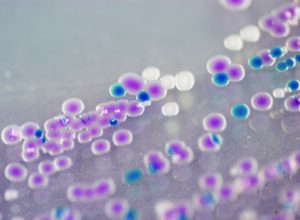
For example, let’s say you regularly encounter Burkholderia cepacia in your manufacturing process, but the manufacturer hasn’t tested that microorganism during the primary validation of its recombinant cascade reagent (rCR).
In that case, it’s a good idea to close that gap and make sure your method can detect the contamination you’re likely to encounter.
Because unfortunately, contamination events can happen.
And when they do, you want to make sure your endotoxin test is capable of detecting them.
That’s really the whole purpose of BET: patient safety.
It’s also worth remembering that microorganisms can change as they adapt to the conditions used to control them.
So it’s important to consider the microorganisms relevant to your own manufacturing process when evaluating a new reagent.
“Looking at the vendor’s primary validation package is really important.”
Do you think recombinant reagents will eventually replace LAL completely?
I honestly think that LAL is going to be used for many more years.
I think it’s going to be a really long transition.
And there’s another important point to consider: horseshoe crabs.
The biomedical industry has helped protect these animals. In certain areas, protections have been put in place to prevent horseshoe crabs used for biomedical bleeding from also being used as bait.
So if we completely move away from LAL, those protections could disappear.
We need to remember that horseshoe crabs have been around for more than 450 million years, and it’s important to protect this resource.
Of course, I think more laboratories will move toward recombinant reagents.
But I’ve also heard of products that don’t work with recombinant reagents, so laboratories still need to use LAL.
And the opposite can happen too.
So once again, it comes back to choosing the best reagent for your particular product and process.
A big thank you to Meg Provenzano for sharing her experience and perspective on the future of endotoxin testing!
Recombinant technologies offer new possibilities, but as Meg reminds us, the most important thing is to choose a method that works for your products and helps protect patients.
If you have any questions about endotoxins, feel free to ask them in the comments.