
In recent years, standards have increasingly encouraged food microbiology laboratories to use strains as reference materials. These strains can be used for method verification, culture media performance testing, or technician qualification.
In addition to having a significant cost for the lab, these strains are not always easy to manage.
Fortunately, there are microbial QC strains suppliers that have developed strain formats suitable for food laboratories… The challenge is finding them!
To make your task easier, we surveyed the SuperMicrobiologists (over 39,000 subscribers on LinkedIn) to find out which QC control strain suppliers they prefer.
Here is their response.
Summary:
- 1 – Best Quantitative QC strains
- Vitroids and Lenticule
- BAControl
- Challengers:
- 2 – Best Qualitative QC Strains
1 – The Best Quantitative quality control strains
The advantage of using calibrated (quantitative or standardized) strains is that you know exactly (or almost… it’s still microbiology!) the number of microorganisms you have in your sample (per pellet, per ml, or per 100uL).
After a short preparation step, you can inoculate your sample, being sure that you’re not mistaken in the target. There is nothing worse than invalidating a test because you put too many or too few microorganisms.
Here are the SuperMicrobiologist’s preferred suppliers of quantitative QC strains (bacteria, yeast and mold) :
Vitroids™ and LENTICULE® discs from Merck*

Vitroids™ and LENTICULE® discs contain viable microorganisms in a certified quantity (generally accredited according ISO/IEC 17025, 9 General requirements for the competence of testing and calibration laboratories), produced under reproducible conditions compliant with ISO 17034 using authenticated strains from NCTC®, NCPF® and CECT®.
Vitroids™ and LENTICULE® discs are available in different concentrations: < 100, between 1000 and 10,000, and >10,000 CFU. For each strain, a CoA (Certificat of Analysis) gives the exact concentration of the sample.
To prepare the strain, you can place the water-soluble disc (pellet) directly on the surface of the culture media or dissolve it in a dilution buffer. The discs require a time period of 10 to 15 minutes to dissolve.
Strengths of Lenticule and Vitroids:
- Certified reference material that is ready-to-use, enhancing efficiency and saving time.
- Cuts inoculum preparation time to just a few minutes by replacing stock and working cultures.
- Guaranteed stability and accuracy of the certified CFU value over the shelf life.
- Production in an accredited laboratory fulfilling ISO 17034 guarantees the traceability of the microorganisms.
- Can be stored at -20 °C. No -80 °C freezer needed.
- Long shelflife : Stable for at least 16 months and are in a viable state with a shelf life of 16-24 months.
These products are Certified Greener Alternative Products. Merck did an interesting study comparing their quantified QC strains to homemade QC strains. Here are some of the results:
- Achieves 82% reduction in material use and a 97% decrease in energy consumption compared to individual media tests of five controlled strains conducted weekly over five years.
- Eliminates extensive preparation and incubation steps, reducing the time required per test from 72 hours to 24* hours compared to lyophilized reference strains from culture collections. *For strains that grow within 24 hours.
- Ensures zero-deforestation by using 100% recycled, fiber-based packaging with FSC certification.
*The Life Science business of Merck operates as MilliporeSigma in the U.S. and Canada.
BAControl from Ielab
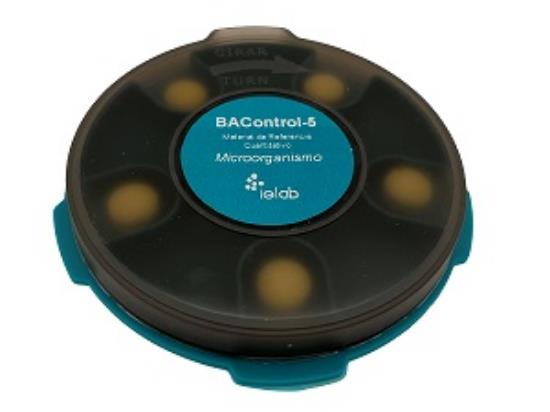
BAControl is a quantitative strain format, with strains from the Spanish CECT microbial collection (Colección Española de Cultivos Tipo).
Ielab offers 3 levels of concentrations <100, between 100 and 1000, and > 1000. For each strain, a certificate of analysis gives the exact concentration of the pellet.
Preparing the strain involves 3 steps: Initially, the pellet is dissolved in 20 ml of sterile water. This is followed by a waiting period of 10 minutes, during which the solution should be vortexed every 2 minutes. After this interval, the strain is ready for use.
They have specific strains for water testing, such as the difficult to find Legionella anisa.
Strengths of BAControl:
- Stable suspension 8 hours after rehydration.
- Expiration 12 months from manufacture, with a minimum of 6 months at delivery.
- WDCM correspondences available.
- After rehydration, a considerable number of tests are available (e.g., rehydration in 20 ml = 200 aliquots of 100 ul available).
ielab distributors contacts – ielab contact – Tell them you’ve come from SuperMicrobiologists 😉
The others QC strain suppliers mentioned by the SuperMicrobiologists are Thermo, Microbiologics
The Quantitative QC strains Challengers
Quantitative Certified Reference Materials (CRM) from Biosisto
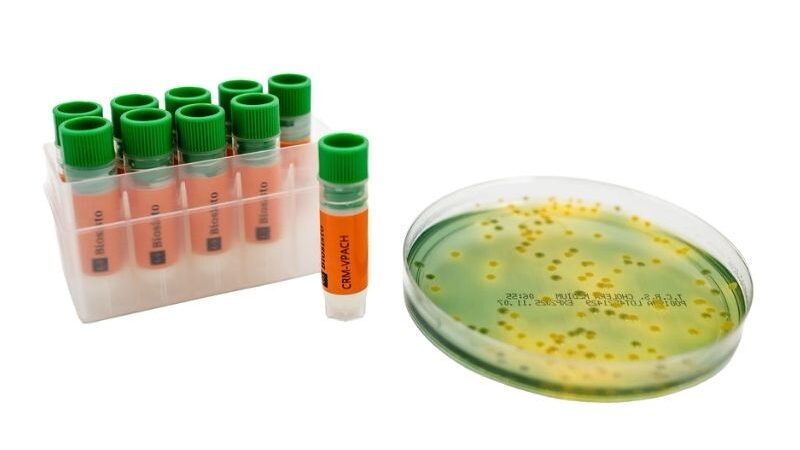
Biosisto provides Certified Reference Materials (CRMs) produced from strains obtained from recognized culture collections listed on the WDCM website and compliant with relevant ISO standards.
As an ISO 17034 accredited producer, Biosisto ensures full traceability, reliability, and batch-to-batch consistency.
The CRMs are available in three concentration levels to match different application needs: low (<1,500 cfu/ml), medium (3,000–15,000 cfu/ml), and high (>30,000 cfu/ml), supporting both routine use and validation procedures.
Designed for ease of use, our materials are stored at -80°C and can simply be defrosted for 30 minutes before use. Once thawed, the liquid product is immediately ready for application. Throughout the day, the CRM remains stable under refrigerated conditions, providing laboratories with both flexibility and efficiency in their testing processes.
Biosisto has many strains available for food testing, including Listeria spp. and Salmonella spp.
Check here all available Food strains. Biosisto does also have strains available for water testing, such as Legionella anisa.
Strengths of Biosisto QC strains:
- Ready-to-use convenience: Thaw and use within 30 minutes, no preparation required. Saving time and and reduces errors.
- Reliable supply: Always in stock, fast delivery, long shelf life (>2 years). Guarantees continuity at your laboratory.
- Smart data insights (BiosistoChart): Free control charts tool for monitoring and interlaboratory comparison.
- Customer Service: Direct contact with a microbiologist to provide the appropriate CRM and assistance with quality issues.
If the CRM you need is not included in the Biosisto collection, they can customize CRMs tailored to your specific strain and concentration requirements.
Bioreference from Eurofins

BioRéférence pellet contain pure strains sourced from well-known collections such as NCTC, ATCC, or CIP.
They have been manufactured in France for over 30 years in an accredited laboratory committed to eco-responsible practices and awarded the EcoVadis Platinum medal (Top 1%).
Formulated to be water-soluble, they are based on a deliberately simple composition, free from additives or preservatives that could impact quality or the environment.
Each pellet comes with a characterization certificate that includes a reconstitution protocol designed to meet ISO 11133:2014 requirements for productivity testing.
Strengths of Bioreference from Eurofins :
- Simple protocol: Just dissolve one pellet in a Tryptone Salt broth tube, perform a dilution, and it’s ready to use. The certificate details the steps to obtain 50-120 colonies per plate. A specific protocol is provided for microplate-based methods.
- Validation on multiple media: Each strain can be validated on various media. Tolerance ranges are provided, eliminating the need for tedious control chart setup.
- Optimized storage: Store at -20 °C in tubes compatible with universal racks.
- Guaranteed traceability: Clear correspondence between the reference strain and its WDCM number, with a maximum of three passages.
- Strict quality control: 5-10% of pellet from each batch are tested internally.
- Customized solutions: Possibility to adjust the CFU per pellet or to work with endogenous strains, based on your needs.
To get the list of available strains, you can contact: Florent.Debruyne@etfr.eurofins.com
Make sure to mention that you’re coming from SuperMicrobiologistes.
2 – The Best Qualitative Quality Control Strains
Non calibrated (qualitative) strains are used to feed the strain bank of food microbiology laboratories. Then the strains could be used to control an identification system, the performance of a culture media, to qualify a technician or as a positive control.
Here are the SuperMicrobiologist’s preferred suppliers of qualitative strains:
BACuali from Ielab
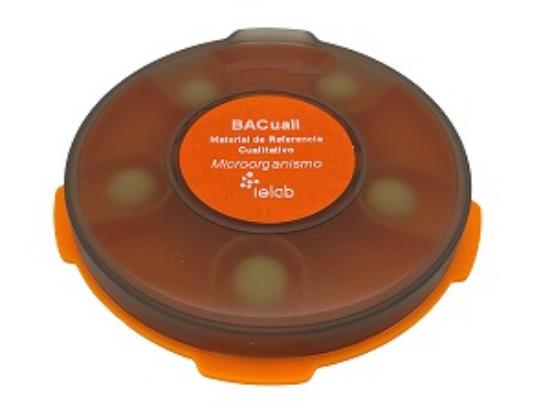
Bacuali is a format of qualitative QC strains from the Spanish CECT collection (Colección Española de Cultivos Tipo).
The pellet is resuspended in 20 ml of sterile water, and after 10 minutes, the strain can be used for manipulation.
Strengths of BACuali:
- Expiration 12 months from manufacture, with a minimum of 6 months at delivery.
- WDCM correspondences available.
ielab distributors contacts – ielab contact – Tell them you’ve come from SuperMicrobiologists 😉
The others qualitative QC strain suppliers mentioned by the SuperMicrobiologists are Thermo, Microbiologics
The Qualitative QC strains challengers
Qualitative Materials by Biosisto
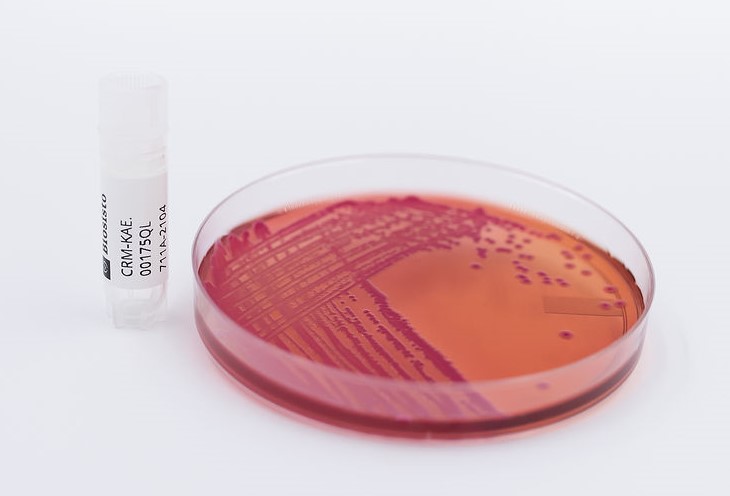
Qualitative materials (QLs) from Biosisto are derived from strains originating from recognized culture collections listed on the WDCM website and fully comply with the ISO standards.
Biosisto is accredited according to ISO 17034.
Materials from Biosisto are straightforward to use. Defrost for 30 minutes, and the liquid is ready for use. The QL can be used throughout the day when stored in the refrigerator.
Strengths of qualitative materials from Biosisto:
- Ready-to-use convenience: Thaw and use within 30 minutes, no preparation required. Saving time and and reduces errors.
- Reliable supply: Always in stock, fast delivery, long shelf life (>2 years). Guarantees continuity at your laboratory.
- Customer Service : Direct contact with a microbiologist to provide the appropriate CRM or QL and assistance with quality issues.
- Ready to inoculate: This qualitative material contains a high concentration and can be used directly to inoculate a sample.
If the material you need is not included in the Biosisto collection, they can customize materials tailored to your specific strain requirements.
Now you have all the information you need to choose the strain supplier that best suits your lab.
Let us know in comment which one you choose!



Just for my understanding – whey this list of OQ strain & what others like Thermo, Microbiologics are worse ? What exacly not suitable in their quality ? Your estimation must be simple advertising sponsors, where is there any objectivity at all, why did these ones make it to the top four? sorry, a very paid view
Hi Nataliya,
Thanks for your comment!
I think you may have missed things in the article, because there are two important points there:
– Both Thermo Fisher and Microbiologics QC strains are included in the “Best” section.
– In the yellow box (we made it yellow on purpose 😉), we explain exactly how these selections are made and, most importantly, how we stay true to the microbiologists’ votes rather than our own preferences.
I hope this helps clarify how our recommendations are built.
Cheers!