
How does the Institut Pasteur’s bacterial strain collection work?
We were living our lives as microbiologists just fine until one day, a SuperMicrobiologist asked us: “We are asked to use strains with less than 5 passages, but how do culture type collections preserve them for decades?” Anonymous SuperMicrobiologist And since then, we haven’t slept… So, we contacted one of the most renowned strain collections […]
Why is STEC detection in food sample so complicated?

Whether it’s for the ISO/TS 13136 standard or for alternative methods, detecting strains of Escherichia coli that produce Shiga toxins (STEC) is quite a challenge. Here’s why. Content : What is a STEC? We wrote a complete (and simple) article on the definition of STEC. But in summary a STEC is an Escherichia coli with […]
Detection of STEC in Food
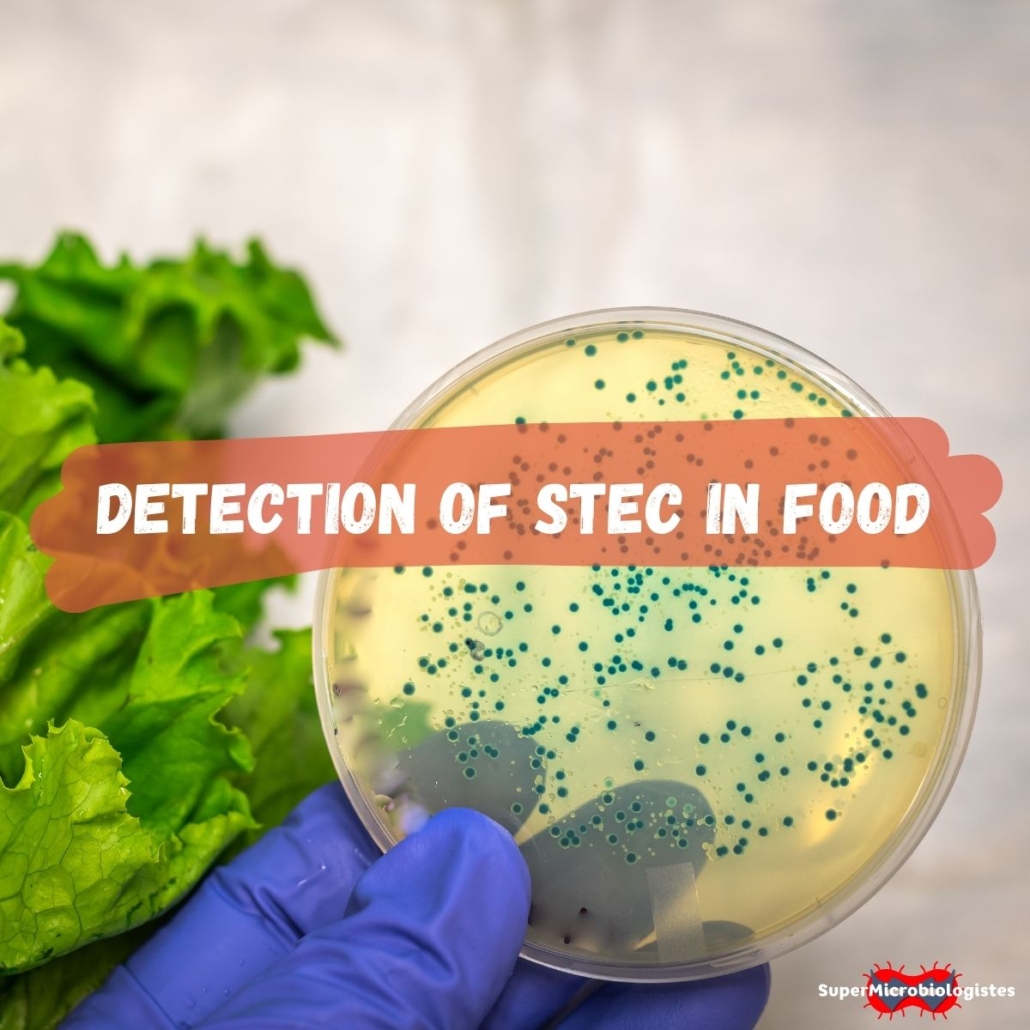
The detection of Shigatoxigenic Escherichia coli (STEC) may be one of the most complex topics in food microbiology at the moment… and that’s exactly what makes it exciting. The aim of this article is to explain as simply as possible what STEC is, what the regulations are, but most importantly, how to detect them in […]
How to choose the best method for detecting STEC (Shiga Toxin-producing E. coli)?
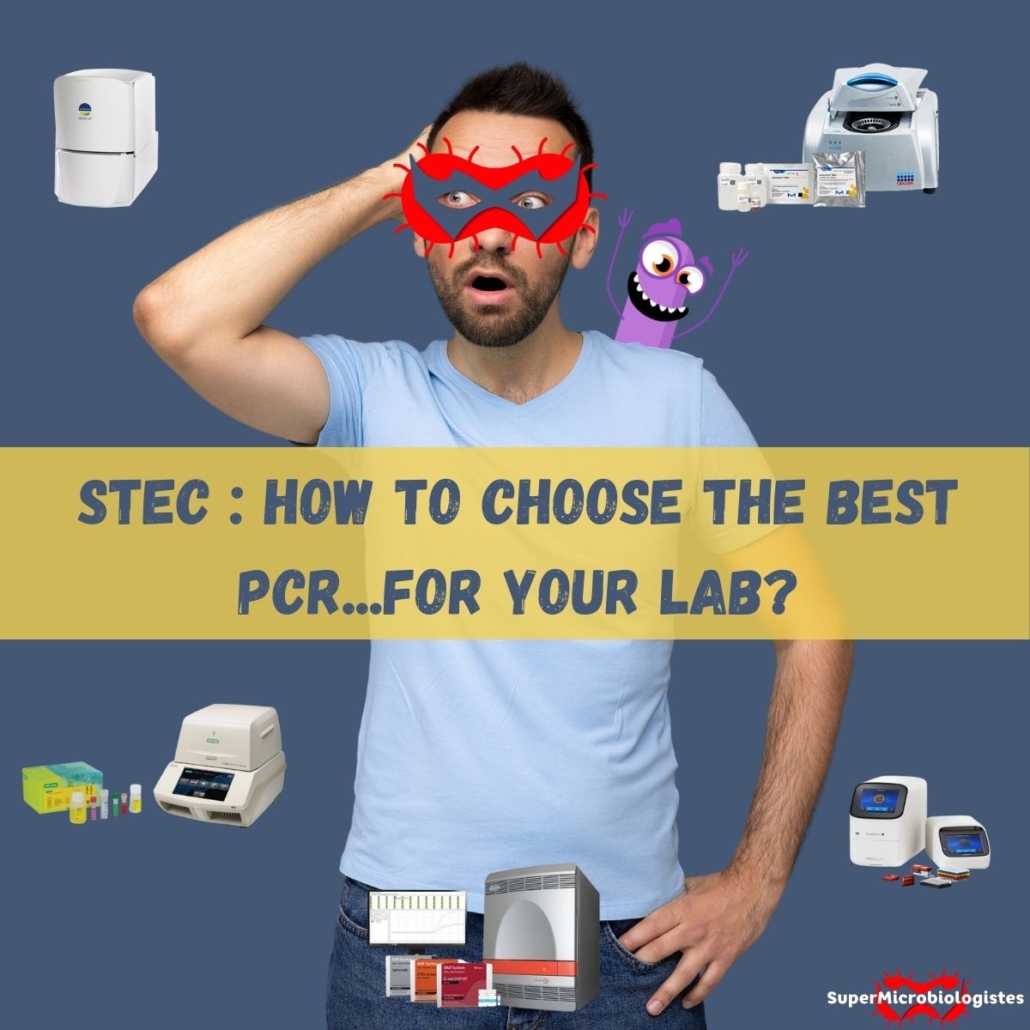
There are fewer than ten validated methods for detecting pathogenic STEC in foods… but that doesn’t make the choice any easier. Some of these methods will be more or less suited to your matrices and your laboratory. It’s therefore important to fully understand the stakes before diving into one technology or another. The goal of […]
Glossary of Shigatoxigenic Escherichia coli (STEC)

While writing our articles on STEC, we quickly realized that there were many acronyms and abbreviations. Even ourself were a little bit lost. So, we decided to build a glossary, and because we don’t like to keep things to ourselves, here it is: AEEC: Attaching and Effacing Escherichia coli are strains of E. coli possessing […]
Integrating a New Microbiologist: How to Optimize Training and Qualification

When a new microbiologist joins your team, before they can fully contribute to laboratory analyses, two crucial steps are necessary: training in the lab’s specific methods, followed by… their authorization! But what is this exactly? Authorization, far more than a mere formality, is an essential process. In a context where recruiting and especially retaining technicians […]
Microbiology: Should We Use CRM QC Strains?

Did you know that among the quality control strains we use, there are 2 types of materials? There are: It has long been believed that these were the same, but no… the term “certified” makes all the difference here (and not just in terms of price!). To learn more about what the term “Certified” means, […]
Let’s Talk Contamination: Salmonella spp., 2009 – Peanut Corporation of America
It’s by learning from past crises that we can (perhaps) avoid future ones. In this series of articles “Let’s Talk Contamination”, we hope to one day turn into podcasts, we aim to tell you the story of the most significant microbiological contaminations in recent years and any lessons learned (or not). Let’s dive right in […]
Metrology and Maintenance of a class 2 Biological Safety Cabinet (BSC)
Is your biological safety cabinet (BSC) functioning properly? It means, does it really protect the laboratory environment, the microbiologist, and the sample. To ensure this, it must be regularly tested, and if the filters are damaged or clogged, they must be replaced. We interviewed two specialists in BSC maintenance to better understand the physical tests […]
6 tips to optimize the use of a Biological Safety Cabinet
In this article, we won’t presume to explain how to use a BSC… We spend more time behind our computers than in front of a BSC. However, during the interviews we conducted to write the series of articles on BSCs, we gathered some tips here and there for “optimizing” the use of our BSCs. Here […]