This interview was conducted following a suggestion from Thermo Fisher Scientific, who wanted to highlight a key challenge in the pharmaceutical industry: how to prepare media for an Aseptic Process Simulation (or MFT).
If there’s one place that’s hard to get into in a pharmaceutical lab, it’s the production area… especially when an Aseptic Process Simulation (APS), sometimes referred to as a Media Fill Test (MFT), is taking place.
But no door is ever too closed for the SuperMicrobiologists.
We managed to sneak in (with permission, of course!) and meet an APS specialist, who told us everything about Aseptic Process Simulations, and we loved it.
Here’s her story and feedback.
Sara, could you please introduce yourself and your laboratory?
I’m Sara Guccini, I’m sterility assurance & risk management manager in Kedrion, Bolognana plant (Italy, Tuscany). My department is included in the Quality Assurance team, me and my colleagues collaborate closely with the QC Microbiology team and with the QA Operations team dedicated to the aseptic filling departments.
One of the main responsibilities of my team is to manage Aseptic Process Simulation (APS) activities from a quality assurance perspective, ensuring full compliance with the current EU GMP Annex 1 requirements.
My colleagues Alessandro Dondini and Alessia Tullio helped me answer this interview.
What type of products do you manufacture?
Kedrion (Bolognana plant) manufactures aseptically filled products derived from human plasma, as human albumin, human immunoglobulins (5% and 10%) and human coagulation factors, all in the form of injectables.
“During the simulation, both routine and exceptional activities are reproduced”
General Understanding of Aseptic Process Simulation
For someone new to the general concept (let’s say, a chemist!), could you briefly explain what a Media Fill Test (MFT) is?
An aseptic process simulation, also known as media fill, is a simulation of the entire aseptic manufacturing process using a culture media instead of the product. It includes all aseptic operations associated with routine production, such as assembly, filling, freeze-drying (if applicable), and sealing processes, according to the EU GMP Annex 1 requirements.
During the simulation, both routine and exceptional activities are reproduced, such as : personnel shift changes, filling machine set-up, environmental and personnel gowns monitoring, ordinary and extraordinary interventions and related holding times.
What is the purpose of performing an APS?
The purpose of APS is to verify the process’s ability to ensure product sterility.
How frequently are you required to run APSs?
APS runs are performed at least twice a year for each filling line, but additional simulations may be required before the scheduled deadline in case of unexpected events, such as: non-conforming sterility results, a failed APS, or process deviations.
Is this a requirement of the Pharmacopoeia?
No, it is a requirement of EU GMP ANNEX 1 “Manufacture of Sterile Medicinal Products”.
“At least twice a year, and for each filling line before the shutdown period, the biological production department prepares the culture medium in a tank or a disposable bag and sends it to the filling department.”
Execution of the Media Fill Test
Practically speaking, how does a Media Fill Test take place in your facility?
At least twice a year, and for each filling line before the shutdown period, the biological production department prepares the culture medium in a tank or a disposable bag (the same type of container normally used for the product bulk during aseptic manufacturing) and sends it to the filling department.
There, the medium is sterile-filtered and filled into vials using the filling machine.
If the simulation concerns a liquid product, the vials are sealed in-line and then stored in a temperature-controlled room for at least 14 days.
After incubation, qualified personnel visually inspect each vial to detect any signs of contamination.
If the simulation involves a freeze-dried product, the vials filled with culture medium are placed in the lyophilizer, where a dedicated cycle is performed. This cycle reproduces the stationing and stoppering phases without inhibiting the growth of potential microbial contaminants. After at least 12 hours, the vials are unloaded, sealed in the crimping machine, and then follow the same path as the liquid products.
All materials used during APS (tanks, bags, stoppers, vials) are identical to those used in routine production, as are the operating procedures followed by personnel.
Quality Assurance (QA) manages all documentation activities through dedicated procedures, batch records, and risk assessment documents that support decisions regarding batch size, vial format, and holding times to be challenged during the simulations.
What are the acceptance criteria to consider an APS successful?
According to point 9.46 EU GMP Annex 1: “the target should be zero growth. Any contaminated unit should result in a failed APS.”
If an APS fails, what is the process you follow?
In the event of contamination, it is necessary to open a deviation according to a dedicated procedure and perform an investigation to determine the cause of the APS failure.
APS Culture Media Preparation
Which culture media do you use?
We use cold-filterable vegetable peptone broths specifically designed for microbiological media fill trials in the pharmaceutical industry.
They are produced using raw materials free from any animal-derived components.
Are there any guidelines in the type of peptones (animal derived or animal origin-free) when producing products for human use?
Based on the EMA guideline “Note for guidance on minimising the risk of transmitting animal spongiform encephalopathy agents (EMA/410/01 rev.3)”, it’s preferable to use animal-origin-free (AOF) media for products intended for human use. So this is what we follow.
Do you use powder that you reconstitute or ready to use bags with sterile media?
We work with powdered media that we prepare and reconstitute ourselves.
What volume of media do you typically need for one APS?
The volume depends on the batch size of the APS. We determine it using a validated formula.
How do you prepare the media?
We prepare the exact amount of culture medium needed for each test.
Rather than using an autoclave, we sterilize it by filtration, then aseptically transfer it into the final containers under a laminar flow hood. Then the container is sent to the production area to run the APS.
Do you receive the culture medium (powder) in a sterile form?
The culture media we use are sterilized by gamma irradiation.
Can the medium clog your sterilizing filters?
That’s definitely a drawback of cold-filterable media, but with the one we use, it hardly ever happens.
What are the benefits and the limitations to do a cold filtration?
The advantages of cold sterilization are:
- Shorter timelines
- Don’t need to use an autoclave
- Lower costs
- No handling of high-temperature objects
- Lower risk of bottle pressure breakage
Disadvantages:
- Increased handling of solutions (e.g. post-filtration capping)
- Accidental filter breakage
- A laminar flow hood or controlled environment required
- Filter clogging
Verification of the Culture Media Performance
How do you verify the performance of the media you use?
We check its performance just like for any other culture medium, by running a Growth Promotion Test (GPT).
Do you perform a growth promotion testing with each APS?
We perform a GPT on every batch of powder we receive from the supplier, and we also run another one at the end of each APS.
The role of the Culture Medium Suppliers in APS
Which are the main media supplier are you currently working with?
Our supplier for APS culture media is Thermo Fisher Scientific Inc., and we’ve been working with them for more than ten years now.
Why did you choose the Thermo APS culture media?
We selected Thermo Fisher’s APS culture media because of the high quality of the raw materials and the company’s proven reliability.
What is going on after the Aseptic Process Simulation
Is there any specific cleaning of the production lines required after an APS, since culture media have been used?
In our facility, each APS is followed by a line shutdown period. During this time, the cleaning and disinfection strategy is applied with the goal of restoring the environmental classification of the rooms.
We would like to warmly thank Sara Guccini, Alessandro Dondini, and Alessia Tullio for answering all our questions and giving us valuable insights into what it’s really like to run an APS from inside the manufacturing plant!
A Few Words about Thermo Fisher Scientific APS Culture Media
Thermo Fisher Scientific provides a comprehensive range of media fill testing products designed to support aseptic process simulations.
Thermo Scientific™ cold filterable media are specifically formulated to simplify media fill procedures, delivering high-quality performance with minimal preparation. These formulations are available in both animal-origin and animal-origin-free versions to accommodate different process requirements.
The cold filterable media are ultrafiltered for rapid and consistent solubility, eliminating the need for heating and reducing the risk of blockages. They are also Pharmacopoeia (USP/EP) compliant, BSE- and mycoplasma-free, and γ-irradiated for sterility assurance.
Key features of Thermo Scientific™ cold filterable media include:
- Pharmacopoeia (USP/EP) compliance
- BSE and mycoplasma free
- γ-irradiated for sterility assurance
- Ultrafiltered for fast and consistent solubility
- Cold-filterable, requiring no heating to dissolve
- High solubility, reducing the risk of filter blockages
Media fill products are available in multiple formats, including Dehydrated Culture Media (DCM; Fig. 1) and BioProcess Containers (BPCs; Fig. 2).
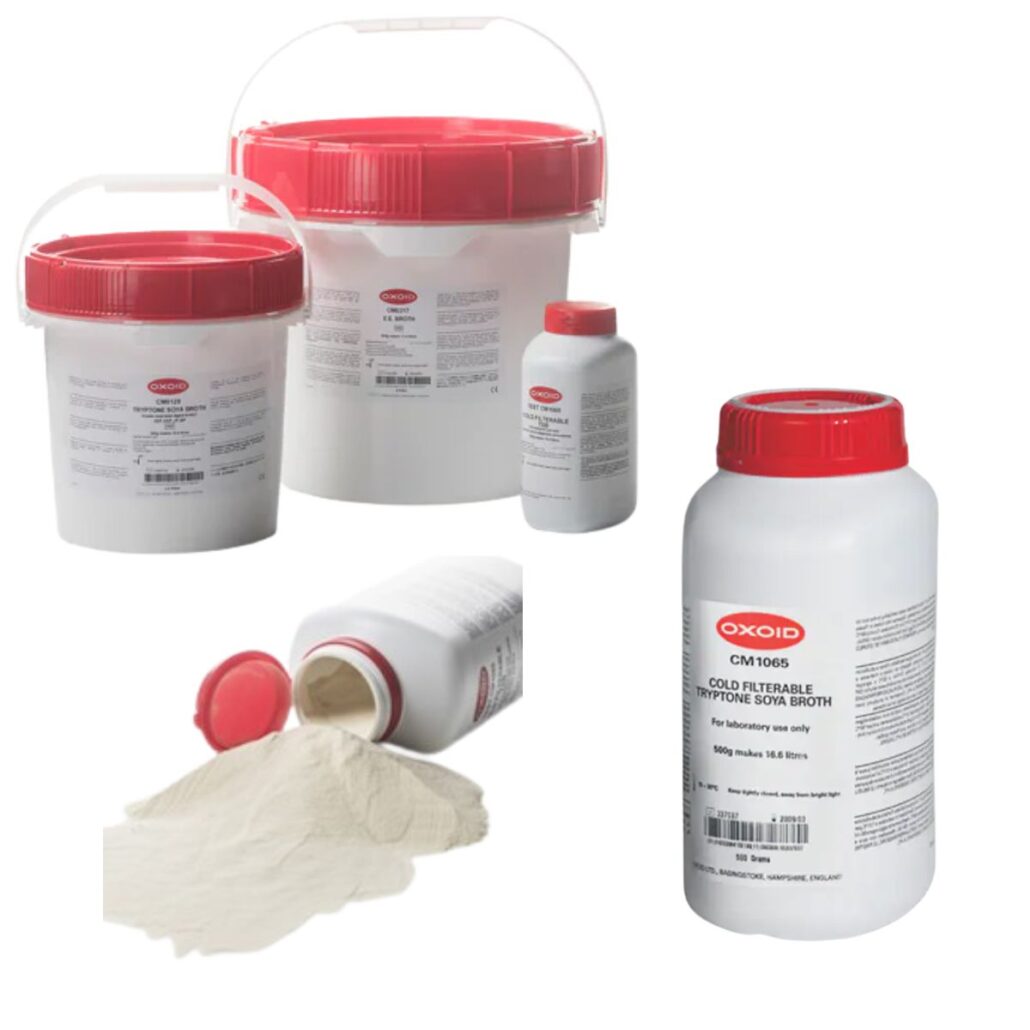
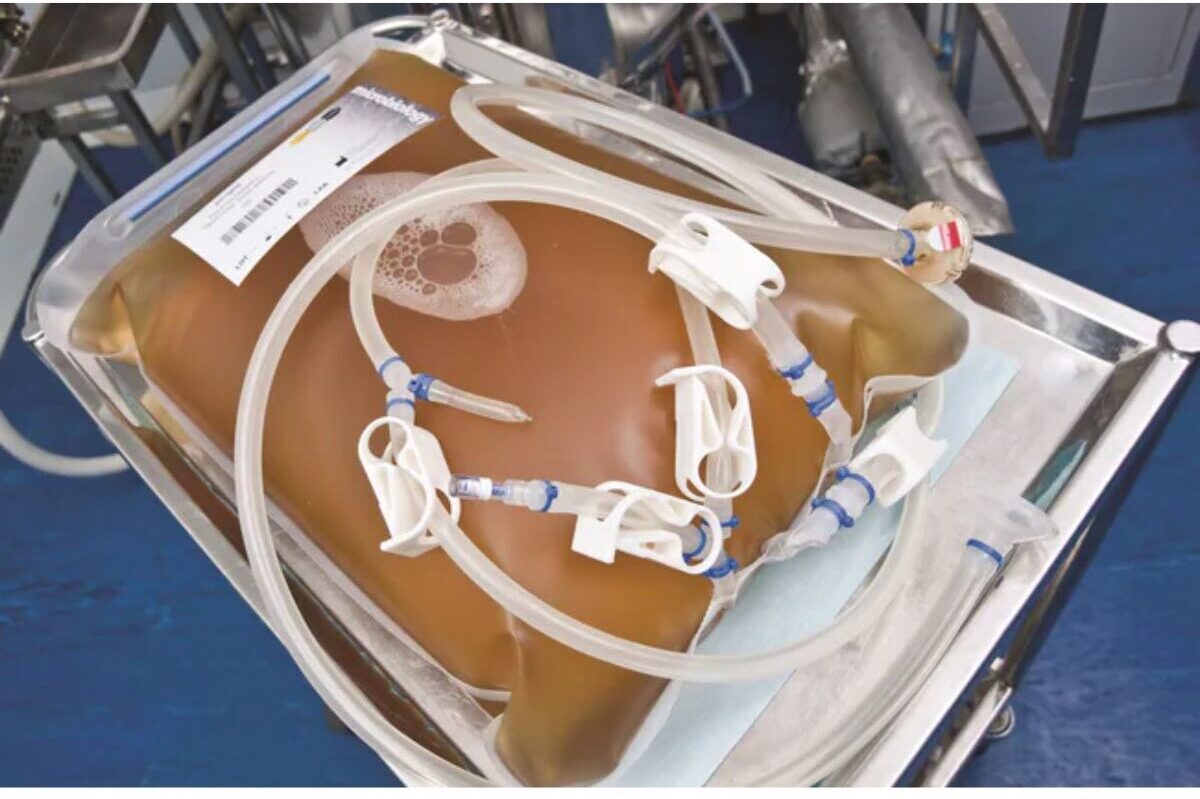
These 2 format offers flexibility for different workflow needs. Large single-lot quantities up to 600 kg can also be supplied to streamline incoming goods control and support consistent production.
For quality control applications, including growth promotion testing, Thermo Scientific™ Quanti-Cult Plus™ Quantitative Quality Control Organisms are available. These provide defined, reproducible levels of viable microorganisms with full traceability through ATCC® Licensed Derivative strains.