We surveyed the SuperMicrobiologists working in food microbiology labs to find out which culture media preparators they prefer.
Three brands of media preparators came out on top in this survey, and we’ll introduce them in this article.
Contents:
- The MEDIACLAVE
- Challengers
What is a media preparator?
A media preparator (also called Media Sterilizer) is a “machine” that helps prepare and sterilize culture media.
In food microbiology labs, these preparators are mainly used to produce enrichment broths, such as Buffered Peptone Water (BPW) and Fraser broth (or Half-Fraser broth).
Using a media preparator is relatively easy. You put the dehydrated culture medium (the powder) and water into the stainless steel tank, and then start the sterilization cycle (20 minutes at 121°C).
During this process, the machine sterilizes the medium while stirring it to ensure it mixes well. After sterilization, it cools the medium down so it can be safely used by the operator and the microorganisms … after all, we don’t want to burn them!
When preparing an enrichment broth, the preparator is directly connected to a gravimetric dilutor. The only thing left to do is weigh the sample, and the dilutor will add the sterile enrichment broth.
Easy, right?
The MEDIACLAVE from INTEGRA
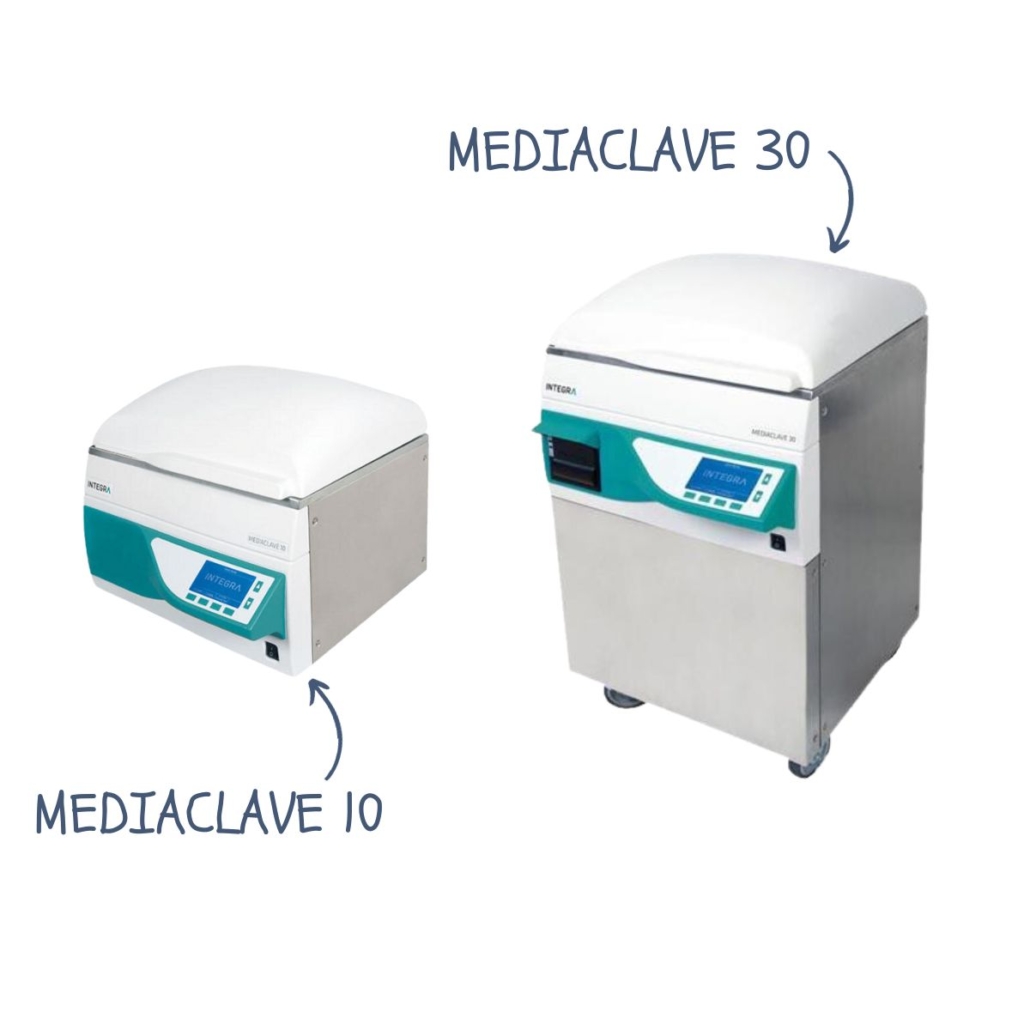
INTEGRA Biosciences is well known for its pipettes, but it also offers the MEDIACLAVE range of media preparators.
Two sizes are available: MEDIACLAVE 10 (10 liters for preparing agar media) and MEDIACLAVE 30 (30 liters for enrichment broths).
The MEDIACLAVE range is manufactured in Switzerland.
MEDIACLAVE 10/30 key strengths:
- Easy to use: With its sleek design, the MEDIACLAVE 10/30 is very user-friendly (few buttons, intuitive interface).
- Reliability: Thousands of MEDIACLAVE units are used in microbiology labs (research, clinical, pharma, food) worldwide. These media sterilizers are known for their safety and high reliability.
- Maintenance: INTEGRA Biosciences offers preventive and curative maintenance contracts, with the option to provide a replacement unit within 48 hours during repairs.
The other media preparator mentioned in the survey are those from bioMérieux and Systec.
Challengers
TLV-MP Series by RAYPA

The TLV-MP combines media preparation, sterilization, cooling, dispensing, and automatic cleaning in a single unit, simplifying daily laboratory workflows.
Models productivity range from 1 to 90 L (5 models : 18 L, 36 L, 54 L, 72 L and 90 L), supporting intensive, high-throughput operations with full reproducibility.
The adjustable agitation and the sample temperature probe ensure perfectly homogeneous media.
The built-in peristaltic pump enables precise and adjustable dispensing by volume and speed. Other dispensing options, including a gravimetric dilutor or automatic petri dish filler, can also be used.
Automatic line disinfection reduces contamination risk and prevents media solidification.
The TLV-MP ensures quality and regulatory compliance with traceability for data management. Certified technical services conducted the recommended preventive maintenance programs.
TLV-MP Series key strengths:
- Dual Functionality: Prepare culture media and sterilize laboratory materials in a single unit.
- Advanced Connectivity: Secure digital data management with full traceability in compliance with FDA, GMP, and GLP standards.
- Automatic cleaning: Dispensing lines are disinfected before, during, and after operation.
The ReadyStream from Merck
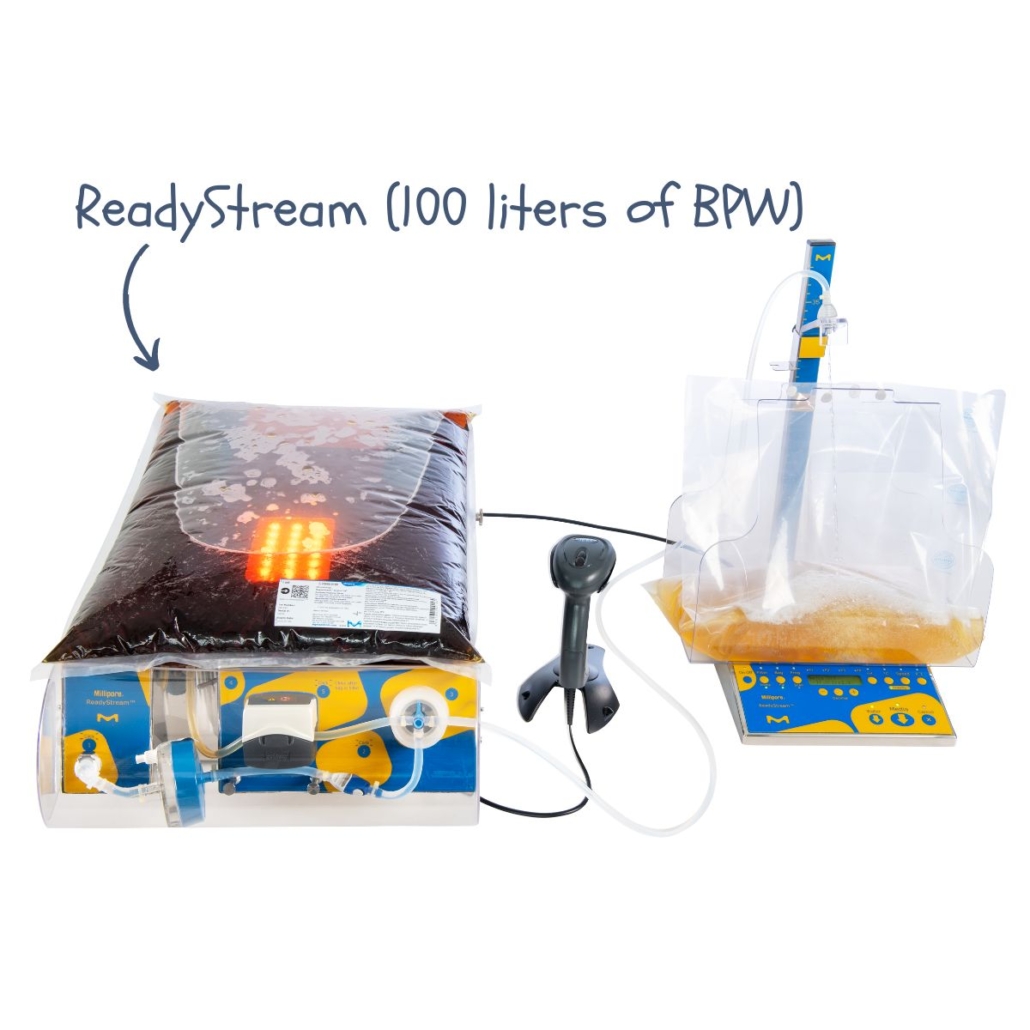
The ReadyStream from Merck is not exactly a “media preparator” like the ones described above, but it’s still a technology that allows you to prepare sterile enrichment broth from dehydrated media.
This system can reconstitute 100 liters of sterile BPW in just a few minutes at the desired temperature.
A bag containing dehydrated BPW granules is connected to the ReadyStream system.
The bag is first rehydrated with 10 liters of sterile water to prepare a 10X concentrated BPW solution.
Then, whenever needed by the laboratory, this 10X concentrated BPW is diluted again with pre-heated sterile water to produce a 1X BPW solution ready for use.
NEW in 2026 : Fraser is now available !
The three key strengths of ReadyStream:
- Prepare 100 liters of BPW in just 15 minutes.
- Sterilization is done through filtration, which uses less energy than heat sterilization and it eliminates the risk of burns.
- The prepared medium can be stored for up to 5 days after rehydration.
If you still have any questions regarding media preparators, let us know in the comments. We’ll be more than happy to answer them!


I propose to team be more deeply in estimation for categories analyzed like Best dehydrated culture media/Best Media Preparator e.t . It is looked like very subjective conclusion without serious without in-depth technical comparisons and without sufficient justification. The problem is that your conclusions are posted publicly and distort the real competitive assessment. It gives the impression that this is a hybrid type of advertising
Dear Nataliya,
Thank you very much for your feedback.
Our approach is quite broad. In our survey, we ask microbiologists to give an overall assessment of the product. This includes performance, robustness, customer support, and ease of use. We also ask about the strengths and limitations of the technology.
It may seem subjective, but we believe it isn’t, as our article is based on hundreds of responses. This gives a valuable overall perspective to help microbiologists make a shortlist, contact suppliers, test the technology in their lab, and then decide.
We could go into more detail and give a score for each parameter, but we are concerned that it would become too complex to understand. Our goal was to create a simple article based on the experiences of as many users as possible.
Thanks again for your message, which gave us the opportunity to share our point of view.
Pierre